
Sponsoring a Parent for Green Card: Step-by-Step Guide
Are you ready to live with your parents in the United States forever? The family-based green card process might seem hard. But knowing how to sponsor a parent is the first step to bring them home.
Sponsoring a parent for a green card helps families stay together. U.S. citizens can make their parents permanent residents. This creates strong family bonds and new chances for everyone.
This guide will show you how to sponsor a parent for a green card. We’ll cover everything from who can apply to getting final approval. We aim to make the immigration process clear and easy to follow.
Key Takeaways
- U.S. citizens can sponsor parents for permanent residency
- The family-based green card process requires careful documentation
- Financial stability is key for a successful sponsorship
- Knowing the legal rules helps avoid application problems
- Being patient is important during the immigration journey
Understanding the Green Card Sponsorship Process
Getting a green card for parents is a big step. It’s important to know how it works. The green card lets people live and work in the U.S. forever.
To apply for a parent green card, you need to know the basics. Only U.S. citizens over 21 can do this. This rule makes sure sponsors can help their parents financially and legally.
What is a Green Card?
A green card shows you’re a permanent resident of the U.S. It lets you live, work, and study anywhere in the country. It’s different from temporary visas because it leads to long-term stability and maybe even citizenship.
Who Can Sponsor?
- U.S. citizens aged 21 or older
- Direct family members (parents, children, spouses)
- Individuals with stable financial resources
- Those able to complete an Affidavit of Support
Types of Green Cards
| Green Card Type | Eligibility | Key Features |
|---|---|---|
| Family-Based | Immediate relatives of U.S. citizens | No annual caps on visas |
| Employment-Based | Skilled workers and professionals | Requires job offer or exceptional abilities |
| Humanitarian | Refugees and asylum seekers | Special protection categories |
For parents over 21, the family-based category is the easiest way. U.S. citizen children must show they can support their parents financially. They also need to meet legal requirements during the process.
Eligibility Requirements for Sponsoring a Parent
To sponsor a parent for a green card, you need to know some rules. It’s about money and law. You must think about these things carefully.
First, you must meet some important rules. These rules show you can help your parent in the U.S.
Sponsorship Criteria for U.S. Citizens
There are a few main rules for sponsoring a parent:
- Be a U.S. citizen (not a permanent resident)
- Be at least 21 years old
- Show you are really related to your parent
- Have enough money to support your parent
Age and Residency Specifications
The cost and rules for sponsoring a parent depend on your age and if you’re a citizen. If you’re under 21, you can’t sponsor your parents. This is a big rule.
You also need to show you can afford to support your parent. The U.S. government wants to know if you make enough money. You need to make at least 125% more than the poverty line.
Getting the right papers is key. You’ll need:
- Proof you’re a U.S. citizen
- Birth certificates
- Marriage certificates
- Proof of your income
Knowing these rules makes sponsoring a parent easier. It helps families be together in the U.S.
Preparing Your Application
Getting a green card for your parent needs careful steps. First, you must gather the right papers. You also need to know what the USCIS I-130 Form asks for.
Essential Documentation for Parent Green Card Requirements
For a green card, you need lots of documents. You must get these important papers:
- Proof of U.S. citizenship (birth certificate, passport, naturalization certificate)
- Parent’s birth certificate
- Proof of relationship (adoption papers or birth certificates)
- Valid government-issued photo identification
- Marriage certificates (if applicable)
Obtaining Official USCIS Forms
Getting the right forms is key. The main form is the USCIS I-130 Form. You can find it in several ways:
- Official USCIS website (www.uscis.gov)
- Local USCIS field offices
- Download and print from official government websites
- Request by mail from USCIS customer service
| Form Name | Purpose | Where to Obtain |
|---|---|---|
| I-130 | Petition for Alien Relative | USCIS Website |
| I-864 | Affidavit of Support | USCIS Website |
| I-485 | Application to Register Permanent Residence | USCIS Website |
Fill out the USCIS I-130 Form carefully. Make sure all info is right. This helps avoid delays in your parent’s green card.
Financial Responsibility: Affidavit of Support
Sponsoring a parent for a green card means big financial steps. The U.S. government wants to make sure you can support your parent. They don’t want your parent to need public help.
To get a parent visa, you need to fill out the Affidavit of Support (Form I-864). This form shows you can support your parent well. You must have enough money to cover 125% of the federal poverty level.
Income Requirements for Sponsorship
The income rules for sponsoring a parent are clear. They depend on a few things:
- How much your household makes each year
- How many dependents you have
- How big your household is
- Where you live
Completing the Affidavit of Support
When you sponsor a parent, you must show you’re financially stable. You need to give:
- Your federal tax returns from the last three years
- Proof of your job now
- Pay stubs and W-2 forms
- Proof of any other income you have
If your income isn’t enough, you have other options. You can find a joint sponsor or show you have a lot of assets. This can help meet the sponsorship needs.
Filing the Form I-130
Filing for parent immigration starts with the Form I-130, Petition for Alien Relative. This important document begins the process of bringing your parent to the United States. It’s a key step in the USCIS parent sponsorship steps.
The time it takes to process the I-130 for parents can vary. But knowing what the form needs can make things easier. U.S. citizens sponsoring their parents must fill out the form carefully.
Understanding Form I-130
The Form I-130 is detailed and needs exact information. It’s about the sponsor and the parent who wants to immigrate. Important parts include:
- Personal info for both the sponsor and the parent
- Proof of their relationship (like birth certificates)
- Proof that the sponsor is a U.S. citizen
- Where to contact them
Submission Guidelines
When you send in the I-130 form, follow these steps:
- Fill out the form right and clearly
- Get all the needed documents ready
- Pay the filing fee
- Send it to the right USCIS address
Pro tip: Keep copies of all your documents safe for later use.
USCIS will check your petition carefully. If they need more info, they might ask for it. Quick and complete answers to their questions can avoid delays.
The National Visa Center (NVC) Process
After USCIS approves the I-130 petition, the application goes to the National Visa Center (NVC). This is a key part of getting a green card for parents.
The NVC is the main place for immigrant visa processing. It does important things like:
- Reviewing and organizing all required documentation
- Collecting necessary fees for visa processing
- Preparing the case for the final interview at a U.S. consulate
What Happens at the NVC?
When your petition is approved, the NVC sends a welcome letter. It’s very important to follow the instructions carefully. You’ll need to send many documents, like:
- Affidavit of Support (Form I-864)
- Financial evidence
- Civil documents for your parent
Fees and Payments
At the NVC, you’ll have to pay some money. You’ll need to pay fees for things like:
- Visa application fee
- Affidavit of Support fee
- Document processing charges
You can pay online through the NVC website. Keep all your receipts and documents safe. The guide says to track everything closely for a smooth process.
Scheduling the Immigrant Visa Interview
The green card interview for parents is a big step. It’s a key part of getting a green card for your parents. Being well-prepared can really help.
Getting ready for the immigrant visa interview takes planning. Knowing what to do can make you feel less stressed. It also helps you do better.
Preparing for the Interview
Here are some important steps for getting ready:
- Gather all needed immigration papers
- Get your financial documents ready
- Practice answering possible interview questions
- Learn about U.S. immigration laws
Essential Documents Checklist
| Document Category | Required Items |
|---|---|
| Personal Identification | Passport, birth certificate, marriage certificate |
| Financial Evidence | Tax returns, bank statements, sponsorship form |
| Medical Records | Completed medical exam, vaccination records |
What to Expect During the Interview
The interview will be with a consular officer. They will check your application in-depth. They will look at your documents and ask about your family and why you want to move to the U.S.
- Dress professionally and arrive early
- Bring original documents and copies
- Answer questions clearly and honestly
- Remain calm and composed
Every part of the green card interview for parents matters. Showing you’re ready and know the U.S. immigration laws can help a lot.
Medical Examination and Vaccination Requirements
The parent green card process needs a detailed medical check. This check makes sure the applicant is healthy enough to live in the U.S. It’s a key step to keep everyone safe and healthy.
Applicants must see a doctor picked by the U.S. Department of State. This doctor will check many things:
- Detailed physical health assessment
- Review of medical history
- Required vaccination screenings
- Screening for communicable diseases
Approved Physicians for Medical Examination
Finding the right doctor is very important. Only certain doctors are allowed to do these checks. Applicants must:
- Find a civil surgeon certified by U.S. Citizenship and Immigration Services
- Schedule a detailed medical screening
- Bring all needed documents to the meeting
Documentation Requirements
The medical check needs certain papers to support the green card application. Getting ready well can make the green card process faster. Applicants should gather:
- Passport and ID papers
- Vaccination records
- Old medical history papers
- Proof of needed shots
Knowing these health rules is key for a good parent green card application. Being well-prepared and following health rules will make the immigration process easier.
Common Challenges and How to Overcome Them
Getting a parent green card can be hard. You might face unexpected problems. Knowing these can help you get through the process faster.
When you apply for a parent green card, you might run into issues. But, knowing how to deal with them can help you succeed.
Potential Delays in the Process
Costs and times for green cards can change. Delays can happen for many reasons. Here are a few:
- Incomplete documentation
- Background check problems
- Money issues
- Medical exam problems
Addressing Requests for Evidence (RFEs)
The USCIS might ask for more info with an Request for Evidence. If you get an RFE, do these things:
- Read it well
- Get all needed papers
- Reply on time
- Keep a copy of your reply
- Send it by certified mail
Quick and complete answers to RFEs can avoid big delays. Getting help from a lawyer can make things easier.
Waiting for Green Card Approval
The wait for a green card for parents is full of hope and planning. After sending in the I-130 petition, the waiting starts. It’s a time that needs patience and smart planning.

The wait for a green card can take 6 to 12 months. Many things can change this time. Knowing these can help you plan better.
Understanding Processing Timelines
The time it takes for a parent’s green card can change. Here are some reasons why:
- How busy USCIS is and current laws
- If all documents are in order
- How fast background checks are done
- If there are enough visas
Productive Steps During the Wait
While waiting, you can do a few things:
- Get ready more documents
- Learn about U.S. immigration laws
- Get ready for medical tests
- Stay in touch with your family member
Tracking Your Application
It’s important to keep track of your green card status. Here are ways to do it:
| Tracking Method | Details |
|---|---|
| USCIS Online Case Status | Get updates with your receipt number |
| Phone Inquiry | Call USCIS for specific questions |
| Online Processing Time Tools | Find out how long it takes for I-130 petitions |
Pro tip: Keep copies of all letters and be ready to answer quickly.
Green Card Issuance and Delivery
The last step in getting a green card for parents is very important. After your parent’s application is approved, they are almost a U.S. resident. This is a big step in the U.S. immigration law for parents.
Receiving Your Green Card
How your parent gets their green card depends on where they are. If they are outside the U.S., they get an immigrant visa. If they are in the U.S., they get their green card by mail.
- Typical delivery time: 7-14 business days after approval
- Green card sent via USPS First-Class Mail
- Tracking available through USCIS online portal
Next Steps After Approval
When your parent gets their green card, they need to do a few things. This is to follow U.S. immigration rules.
| Action | Timeline | Purpose |
|---|---|---|
| Review Green Card Details | Immediately | Verify all information is correct |
| Update Social Security Administration | Within 10 days | Ensure proper documentation |
| Register for Selective Service | Within 30 days | Legal requirement for permanent residents |
The green card is good for 10 years. Your parent will need to renew it before it expires. They must also follow certain rules to stay a legal resident.
Rights and Responsibilities of Green Card Holders
Getting a green card means you get many benefits. But, you also have to follow some rules. It’s like being part of a big family with rules to keep everyone safe and happy.
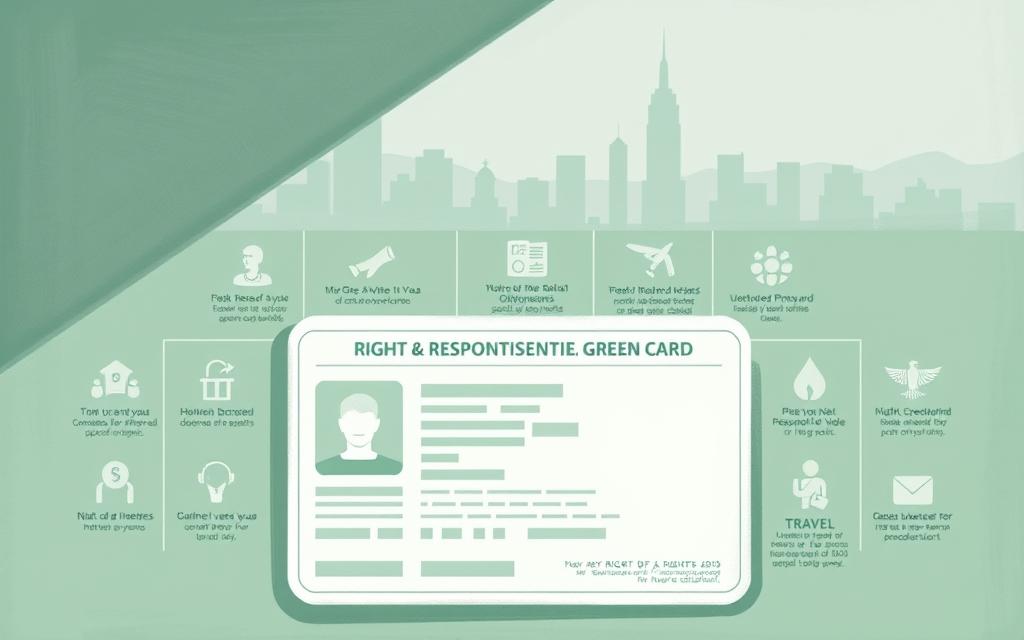
Benefits of Permanent Residency
Green card holders get many good things. Here are some:
- They can live in the United States forever.
- They can work for most employers in the country.
- They are protected by U.S. laws and rights.
- They can get social security and some government services.
- They can become U.S. citizens later.
Legal Obligations and Sponsor Responsibilities
Green card holders must follow important rules. These rules help keep their status good:
- They must file taxes every year.
- They must tell USCIS about any address changes within 10 days.
- They must always carry their green card with them.
- They should not stay outside the U.S. for too long.
The person who sponsored the parent visa must help with money and make sure the immigrant knows the rules. Breaking these rules can lead to losing the green card.
| Responsibility Category | Key Requirements |
|---|---|
| Legal Compliance | Follow all federal, state, and local laws |
| Financial Accountability | Maintain economic self-sufficiency |
| Residency Maintenance | Reside permanently in the United States |
Knowing these rights and duties is key to doing well in immigration and keeping your green card.
Conclusion: The Importance of Family Sponsorship
Sponsoring a parent for a green card is more than a legal step. It shows deep family love and unity. The U.S. immigration law lets families come together, making dreams come true.
The family-based green card program shows what American immigration values. It lets U.S. citizens and permanent residents bring their parents here. This strengthens family ties and adds to America’s cultural diversity.
Starting the sponsorship journey needs patience, preparation, and dedication. The process might seem hard, but the reward is huge. Every step brings families closer to their dreams.
If you can sponsor a parent, start now. Learn what you need, collect documents, and stay determined. Your effort can change your family’s future and create lasting memories in the U.S.