
Getting a US Visa After Overstay: What You Need to Know

Did you accidentally overstay your U.S. visa? Now you wonder if you’ll ever return to the United States. Getting a US Visa After Overstay is like solving a hard legal puzzle.
Visa Overstay Consequences are serious. They can really hurt your future travel plans. U.S. immigration laws are strict. You could face a Reentry Ban USA that stops you from entering for years.
It’s important to understand visa rules well. Every overstay case is different. Knowing your legal options can help you get back into the United States.
Key Takeaways
- Overstaying a visa can lead to serious legal complications
- Different visa types have varying consequences for overstay
- Professional legal guidance is often essential
- Honesty and documentation are critical in reapplication
- Some overstay situations may have possible waivers
Understanding Visa Overstay
U.S. immigration rules can be hard to follow. Visa overstay is a big problem. It can hurt your future travel and immigration plans. Knowing about Unlawful Presence USA is key for those with temporary visas.
Defining Visa Overstay
Visa overstay happens when someone stays in the U.S. longer than allowed. This leads to serious penalties. These penalties can make it hard to enter the U.S. again in the future.
Common Reasons for Overstay
- Unexpected medical emergencies
- Complex family situations
- Financial constraints preventing departure
- Misunderstanding of visa expiration dates
- Pending legal or employment matters
Consequences of Overstaying
Overstaying can lead to big problems. It can make it hard to get back into the U.S.:
- 180 days to less than 1 year overstay: 3-year re-entry ban
- 1 year or more overstay: 10-year re-entry ban
- Potential permanent inadmissibility
- Difficulty obtaining future visas
It’s important to keep track of your visa’s end date. Knowing the risks can help avoid these problems.
Visa Waiver Program and Overstay
The Visa Waiver Program (VWP) lets travelers from certain countries visit the United States without a visa. It makes travel easier but has strict rules. These rules can hurt those who stay too long.
It’s important to know the Visa Waiver Program well. You must understand its rules and the penalties for staying too long. People in this program need to know how long they can stay.
Program Overview
The VWP lets people from 38 countries visit the United States for up to 90 days without a visa. The program has a few main points:
- Electronic travel authorization is needed
- No visa stamp in your passport
- They watch when you enter and leave
Implications of Overstaying
Staying too long in the Visa Waiver Program has big problems. If you stay past your time, you face big bans. These bans can stop you from coming back to the United States for a long time.
Potential Consequences
Overstaying can lead to:
- Being kicked out of the VWP
- A three-year ban from entering
- A ten-year ban for staying too long
To lift a ban, you need a lawyer and to know a lot about immigration laws. Each case is different and needs careful handling.
Travelers must follow VWP rules closely to avoid long-term travel problems.
Types of US Visas
It’s important to know about the different US visa types. This is true for those facing F1 Visa Overstay Reentry issues. The US has many visa categories. Each has its own rules and ways to help those who have overstayed.
Understanding Visa Options After Overstay is key. You need to know about the different visa types. The USCIS Overstay Rules affect each visa type differently. So, it’s important to look at your situation closely.
Nonimmigrant Visas
Nonimmigrant visas are for short-term visits. They are for:
- Student Visas (F-1): Important for international students
- Tourist Visas (B-1/B-2)
- Work Visas (H-1B, L-1)
- Exchange Visitor Visas (J-1)
Immigrant Visas
Immigrant visas lead to permanent residency. The main types are:
- Family-sponsored visas
- Employment-based visas
- Diversity immigrant visas
Specialized Visa Variants
Some visas offer special chances for those with complex pasts. These visas can help those who have had overstay issues.
It’s vital to check your situation carefully. Each case is different. You need to find the best way to move forward.
Eligibility for Reapplication After Overstay
Reapplying for a U.S. visa after overstaying is tough. Knowing if you can reapply is key to moving forward with your plans.
Timing Considerations for Visa Reapplication
The wait time for a U.S. visa reapplication varies. It depends on how long you stayed without permission:
- Less than 180 days overstay: May face a 3-year entry ban
- More than 1 year overstay: Possible 10-year entry ban
- Permanent bar for many or long overstays
Key Factors Affecting Reapplication Eligibility
Several things affect if you can reapply:
- Previous immigration issues
- Why you stayed too long
- Your current situation
- Showing strong ties to your home country
Applicants need to gather lots of documents. They might also need legal help to get through the process.
The Permanent Bar: What It Is
Immigration law is hard to understand. A permanent bar makes it even harder. It’s a big problem for those who broke immigration rules.
A permanent bar is a big penalty. It makes it hard for people to come back to the United States. Knowing about this rule is key for those looking for ways to come back.
Understanding the Duration of the Permanent Bar
The permanent bar is for people who:
- Stayed in the United States without permission for more than a year
- Try to come back after being here without permission
- Got kicked out by immigration authorities
Exceptions to the Permanent Bar
Even with a permanent bar, there are ways to get around it. The I-601 Waiver Guide shows paths to overcome this big legal hurdle.
| Permanent Bar Condition | Potential Waiver Options |
|---|---|
| Unlawful Presence > 1 Year | I-601 Hardship Waiver |
| Multiple Immigration Violations | Special Consent to Reapply |
| Criminal Deportation | Exceptional Circumstances Waiver |
Getting help from a lawyer is very important. An experienced immigration lawyer can help find ways to beat the permanent bar.
How to Overcome Visa Overstay Issues
Dealing with visa overstay can be tough. It’s key to know your legal options after your visa ends. Many people face tough times and need smart plans to fix their immigration status.

When you’re stuck with overstay issues, you have a few important steps to take. The best way is to get a full legal check-up and manage your immigration status well.
Legal Rights and Resources
People with overstay problems have certain legal rights. Knowing these rights is key to making a good plan for your immigration.
- Consult with specialized immigration attorneys
- Gather all your stay documents
- Learn about waivers and appeals
- Write down why you stayed longer
Seeking Professional Help
Getting help from immigration lawyers is very important for overstay appeals. They can help you find ways to get a green card after overstay. They’ll show you what options you have.
| Service | Description | Potential Outcome |
|---|---|---|
| Legal Consultation | Full case check | Custom immigration plan |
| Documentation Review | Look at your immigration history | Find ways to get legal status |
| Appeal Preparation | Make strong legal points | Better chance of success |
Fixing visa overstay problems takes time, careful planning, and expert help. Getting professional legal support can make a hard situation easier to handle.
Preparing Your Visa Application
Getting a visa after overstaying is hard. You need to prepare well and gather the right documents. The steps to adjust your status are complex and need your full attention.
Good visa applications need lots of documents. These show you’re eligible and follow the rules.
Essential Documentation for Your Application
- Passport with valid identification
- Proof of legal entry into the United States
- Marriage certificate (for Marriage After Overstay scenarios)
- Detailed explanation of previous overstay circumstances
- Employment verification documents
Supporting Evidence Strategies
The quality of your evidence affects how fast you get a waiver. Important documents include:
- Affidavits from employers or community leaders
- Financial stability documentation
- Character references
- Medical records (if applicable)
- Educational transcripts or certifications
Crucial Documentation Tips
Transparency is key. Each document must show you plan to follow immigration laws. It should also show you’re ready to be a good resident.
Get all your documents ready well before you apply. If your application is missing or wrong, it might be delayed or even rejected.
Waivers for Inadmissibility
Going through immigration issues can be tough. A Waiver of Inadmissibility is a big help. It lets people who had visa problems try again to enter or stay in the United States.
Understanding Waivers
A waiver is a legal tool to get past immigration hurdles. The I-601 Waiver Guide helps with visa overstay problems. It’s for those facing inadmissibility issues.
Types of Available Waivers
- Extreme Hardship Waiver (Form I-601)
- For those who show a big hardship to a U.S. citizen or green card holder family member
- Needs lots of proof of extreme hardship
- Provisional Unlawful Presence Waiver (Form I-601A)
- For people with unlawful presence in the U.S.
- Let’s them ask for forgiveness before leaving
- Criminal Conviction Waiver
- For some criminal reasons of inadmissibility
- Needs a detailed legal check
Key Considerations for Waiver Applications
Getting a Waiver of Inadmissibility needs careful planning. You must show strong evidence of extreme hardship. This includes:
- Medical issues of family members
- Money problems from being apart
- Emotional and mental effects
- How the home country might affect the family member
Knowing the details of overstay forgiveness can really help. It can make a big difference in getting past immigration problems.
The Application Process
Applying for a visa at the U.S. Embassy needs careful planning. If you’ve had visa bans before, you must prepare well.
The visa application has many important steps. You need to be precise and detailed. Success also depends on good documents and knowing the Waiver Approval Timeline.
Essential Steps for Visa Reapplication
- Gather all needed documents
- Fill out the required forms
- Get ready your eligibility proof
- Book a U.S. Embassy meeting
- Go to the required interview
Processing Timeline Considerations
How long it takes to process a visa varies. It can be 3 to 12 months. Some cases might take even longer.
Key Factors Affecting Application Review
- Your past immigration history
- Why you stayed longer than allowed
- The quality of your documents
- How complex your case is
Getting help from an immigration lawyer can really help. They can tackle challenges in the visa application process.
Interview Preparation
Going to a visa interview after overstaying can be tough. You need to get ready well and talk clearly. You must be open, confident, and know your past well.
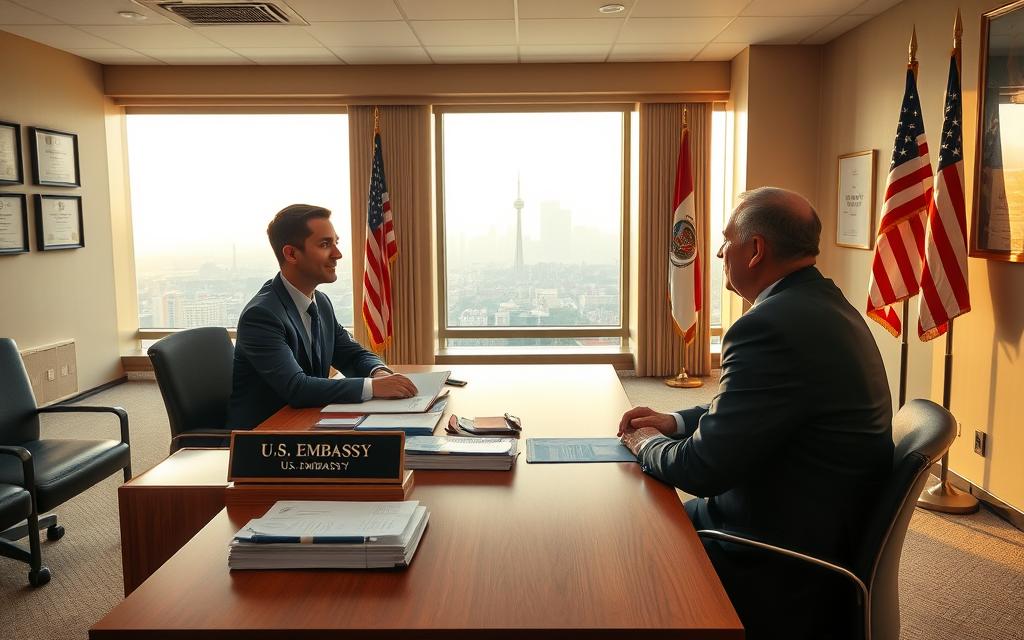
What to Expect During the Interview
The visa interview is very important. Officers will ask lots of questions about your past overstay. You should be ready to talk about:
- Why you stayed longer than allowed
- What you have to show for your application
- Why you have strong ties to your home country
- How you can afford to live there
Tips for Successful Interviews
Getting legal help after overstaying can help a lot. Here are some tips:
- Always tell the truth about your past
- Have all your documents in order
- Show big changes in your life
- Prove you will follow the visa rules
| Interview Preparation Strategy | Key Actions |
|---|---|
| Documentation | Collect all relevant immigration and personal documents |
| Personal Narrative | Prepare clear explanation of previous circumstances |
| Supporting Evidence | Gather proof of employment, financial stability, and ties |
Remember, the interview is your chance to show you follow the rules. And that you really want to visit the United States.
Impact on Future Travel
Understanding the effects of a visa overstay is key. It can limit your future travel to the United States. This makes it hard for people to get back in.
Visa overstays block future U.S. travel. Immigration keeps records that affect your visa chances. This can make it hard to get back in.
Potential Travel Restrictions
- Automatic 3-year ban for overstays exceeding 180 days
- 10-year prohibition for overstays longer than one year
- Permanent inadmissibility for multiple serious violations
Navigating Future Applications
Being open is important when trying to reenter the U.S. after an overstay. You need to explain your past immigration status. Also, show you’re ready to follow the rules now.
| Overstay Duration | Potential Consequences | Visa Options After Overstay |
|---|---|---|
| Less than 180 days | Minimal long-term impact | Standard visa reapplication |
| 180-365 days | 3-year entry restriction | Requires a waiver |
| Over 1 year | 10-year entry prohibition | Needs legal help |
Importance of Honesty
Hiding past overstays can lead to big problems. Being honest and getting legal advice are key to future travel.
Seeking Legal Assistance

Immigration law is very complex. It can be hard to deal with after overstaying a visa. Immigration experts can help a lot. They know how to handle tough situations.
When to Seek Professional Legal Counsel
Here are times when you might need legal help:
- Your overstay has lasted more than 180 days
- You’ve received deportation notices
- Your previous visa applications have been denied
- You have complicated family or employment circumstances
Selecting the Right Immigration Lawyer
Finding the right lawyer is very important. Look for these things when choosing:
- Specialization in immigration law
- Proven track record with overstay cases
- Clear communication and transparency
- Documented success rates
- Personal recommendations and reviews
A good immigration lawyer can explain your options. They help you gather important documents. They also make a plan to solve your problem. They are your support in a hard legal world.
Common Misconceptions
Understanding U.S. immigration can be tough. This is true for USCIS Overstay Rules. Many people believe myths that can cause big problems.
There’s a lot of wrong info about visa rules. This can put travelers and immigrants at risk. Let’s look at some common myths about visa overstays:
Myths That Can Derail Your Immigration Journey
- Myth: Short overstays are not taken seriously
Reality: Even small Visa Overstay Consequences can cause big problems. The U.S. keeps track of every visa issue.
- Myth: Marriage to a U.S. citizen automatically solves overstay issues
Reality: Getting married to a U.S. citizen doesn’t fix overstay problems right away. Immigration laws are complex.
- Myth: You can just explain your overstay at the next visa interview
Reality: Overstays can block you from entering the U.S. again. You might face permanent travel bans.
Critical Facts to Understand
Immigration experts say it’s key to follow visa rules closely. USCIS is very strict about overstays. The consequences can be:
- Potential permanent entry bans
- Harder to get future visas
- Possible legal issues
Knowing the real effects of visa overstays is very important. This is true for anyone traveling or moving to the U.S. Always check official sources. And think about getting legal help to deal with these rules.
Staying Informed
US immigration is complex. Learning and staying aware is key. Knowing USCIS Overstay Rules helps a lot.
Understanding immigration policies is important. It helps you know your Visa Options After Overstay. This way, you can avoid legal problems.
Key Resources for Immigration Information
- Official USCIS Website: The best place for current immigration rules
- Immigration Law Blogs: Get expert advice and updates
- Community Support Networks: Get help and advice from others
- Legal Consultation Services: Get professional help with tough immigration issues
Tracking Immigration Policy Changes
To win Immigration Overstay Appeals, you need to know the latest rules. Here’s how:
- Subscribe to USCIS email newsletters
- Follow official social media channels
- Go to immigration seminars and webinars
- See immigration attorneys often
Getting information early helps a lot. Knowledge and preparation are your best allies in the immigration process.
Conclusion: Moving Forward
Getting a US visa after overstaying can be tough. You need to plan well, gather all your documents, and face past immigration issues. You must be patient, honest, and know your legal options.
With the right help, you can get a visa after overstaying. Immigration lawyers can guide you through the process. They help you show you’re eligible and will follow the rules.
Every visa application is unique. It shows your determination. Many people have overcome visa overstay issues by being honest and getting legal help. Understanding the rules and being thorough is key.
It’s important to act fast. Talk to immigration lawyers who can help you. They’ll make a plan just for you. Being persistent and well-prepared can help you achieve your goal.