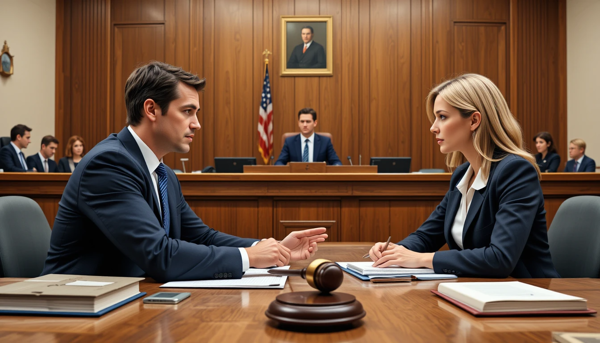
Understanding the Role of a First Amendment Attorney

Imagine a journalist whose investigative article is suddenly pulled from publication after political pressure, or a student disciplined for controversial speech on campus. Each faces the same question: where do free speech rights begin and end? In situations like these, a First Amendment attorney plays a crucial role in defending the constitutional boundaries of expression, religion, and press freedom.
The First Amendment is one of the cornerstones of American democracy. Yet, despite its prominence, its protections are not absolute—and that’s where expert legal guidance becomes essential.
What the First Amendment Actually Protects
The First Amendment to the U.S. Constitution states that “Congress shall make no law… abridging the freedom of speech, or of the press; or the right of the people peaceably to assemble.” Over the centuries, this short sentence has been interpreted through thousands of court cases to define what speech and expression the government can—and cannot—restrict.
Core Freedoms
A First Amendment attorney focuses on five main areas of protection:
- Speech – verbal or symbolic expression, from protests to art.
- Press – journalists’ rights to publish without censorship.
- Religion – both the right to practice freely and freedom from government-imposed faith.
- Assembly – the right to gather and protest peacefully.
- Petition – the right to ask the government for change.
These protections extend not only to spoken or written words but also to expressive conduct—such as wearing a protest armband or burning a flag, as the Supreme Court confirmed in Texas v. Johnson (1989).
When Free Speech Meets Its Limits
Despite broad protections, not all speech is protected under the First Amendment. A lawyer specializing in this field helps clients understand where legal lines are drawn.
Unprotected Categories
Certain types of speech receive little or no protection. Examples include:
- True threats – statements meant to seriously intimidate or incite violence.
- Obscenity – explicit material that fails the legal “Miller test,” named after Miller v. California (1973).
- Defamation – false statements that damage someone’s reputation.
- Incitement to imminent lawless action – urging others to commit immediate unlawful acts.
For instance, a protester can shout criticism of a government official without punishment, but they cannot legally encourage a violent riot. Understanding this distinction often requires careful legal interpretation, which is why people seek guidance from an experienced First Amendment lawyer who can navigate the fine line between protected expression and punishable conduct.
Real-World Contexts Where First Amendment Attorneys Work
These attorneys operate at the intersection of civil rights and public interest law, representing clients from all walks of life—journalists, students, activists, artists, and even government employees.
1. Journalism and Media Law
Freedom of the press cases often involve prior restraint (when the government tries to prevent publication) or defamation claims against media outlets. For example, the landmark New York Times Co. v. United States (1971) case—known as the “Pentagon Papers” decision—reinforced the principle that the government bears a heavy burden when attempting to censor the press.
A First Amendment attorney advising a newsroom ensures reporting practices comply with libel laws while still protecting journalists’ right to publish.
2. Free Speech on Campus
College campuses are frequent battlegrounds for speech rights. While public universities are bound by the First Amendment, private institutions are not, unless they voluntarily adopt free speech policies. Lawyers in this area may defend students disciplined for political statements or challenge restrictive “speech codes.”
3. Employment and Whistleblower Cases
Public employees also have certain speech protections—particularly when exposing misconduct or corruption. However, as established in Garcetti v. Ceballos (2006), speech made as part of official job duties is not automatically protected. A First Amendment attorney helps clarify when an employee’s statements qualify as protected citizen speech rather than workplace conduct.
4. Religious Freedom
Cases involving religion often hinge on the balance between personal rights and government interests. Attorneys may defend individuals whose beliefs conflict with laws—such as zoning restrictions on places of worship—or represent clients challenging government endorsements of specific religions.
Key Legal Tests and How They Work
Courts use a variety of “tests” to determine whether government actions violate First Amendment rights. Understanding these frameworks is essential for both clients and lawyers.
The “Strict Scrutiny” Test
When the government restricts speech based on its content, courts apply strict scrutiny: the regulation must serve a compelling government interest and be narrowly tailored to achieve that interest. Few laws survive this test, emphasizing the strong protection given to political and expressive speech.
The “Public Forum” Doctrine
Where speech occurs also matters. Traditional public forums—like parks or sidewalks—offer the highest level of protection. By contrast, speech in nonpublic spaces, such as courthouses or airports, may be subject to reasonable restrictions. First Amendment attorneys often argue over how to categorize the location of expression to determine the appropriate level of scrutiny.
Why These Cases Matter to Everyone
The work of First Amendment lawyers shapes the very foundation of civic life. Each major case helps define what it means to speak freely, protest peacefully, and access information without fear of censorship. Without ongoing challenges and advocacy, these freedoms could erode under shifting political or social pressures.
Consider how digital platforms and social media complicate traditional free speech questions. While the First Amendment limits government—not private companies—attorneys and scholars continue to debate how online speech should be governed in an age when digital spaces function like modern public squares.
For those interested in exploring further, the American Bar Association’s overview of First Amendment law and the U.S. Courts’ educational guide offer accessible explanations of these evolving issues.
Conclusion: The Continuing Fight for Expression
A First Amendment attorney stands at the front line of protecting the freedoms that define American democracy. Whether representing a journalist, an activist, or an ordinary citizen, their role is to ensure that the government respects constitutional limits on its power to restrict speech or belief.
Key Takeaways
- The First Amendment protects speech, press, religion, assembly, and petition—but not all expression is immune from restriction.
- Courts rely on established tests, like strict scrutiny and the public forum doctrine, to evaluate government actions.
- Attorneys specializing in this field defend clients across contexts—from media law to campus expression and religious liberty.
- These protections continue to evolve as society grapples with new forms of communication and public discourse.